Colin Griffin’s lessons, challenges, and strategies behind building Krumware
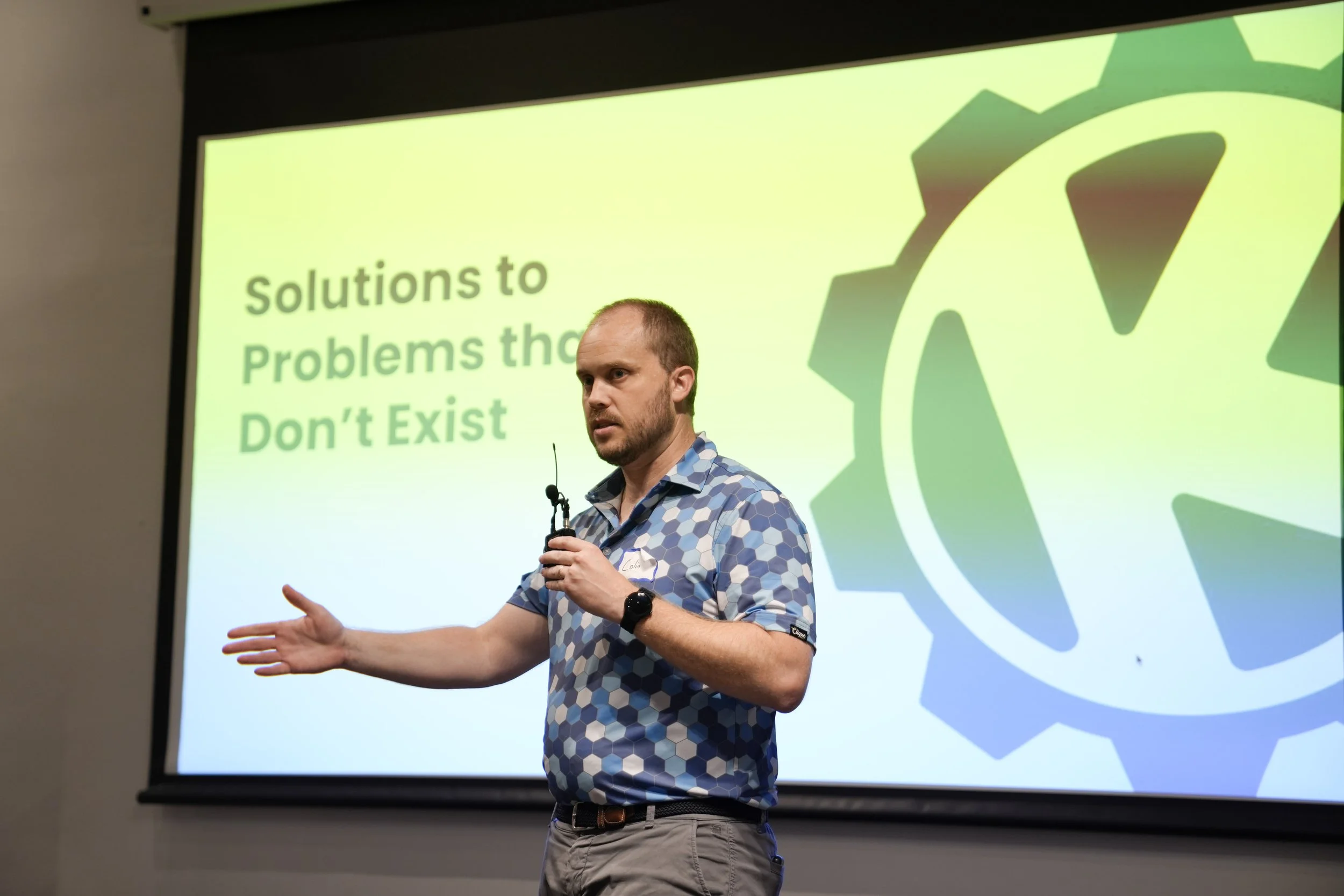

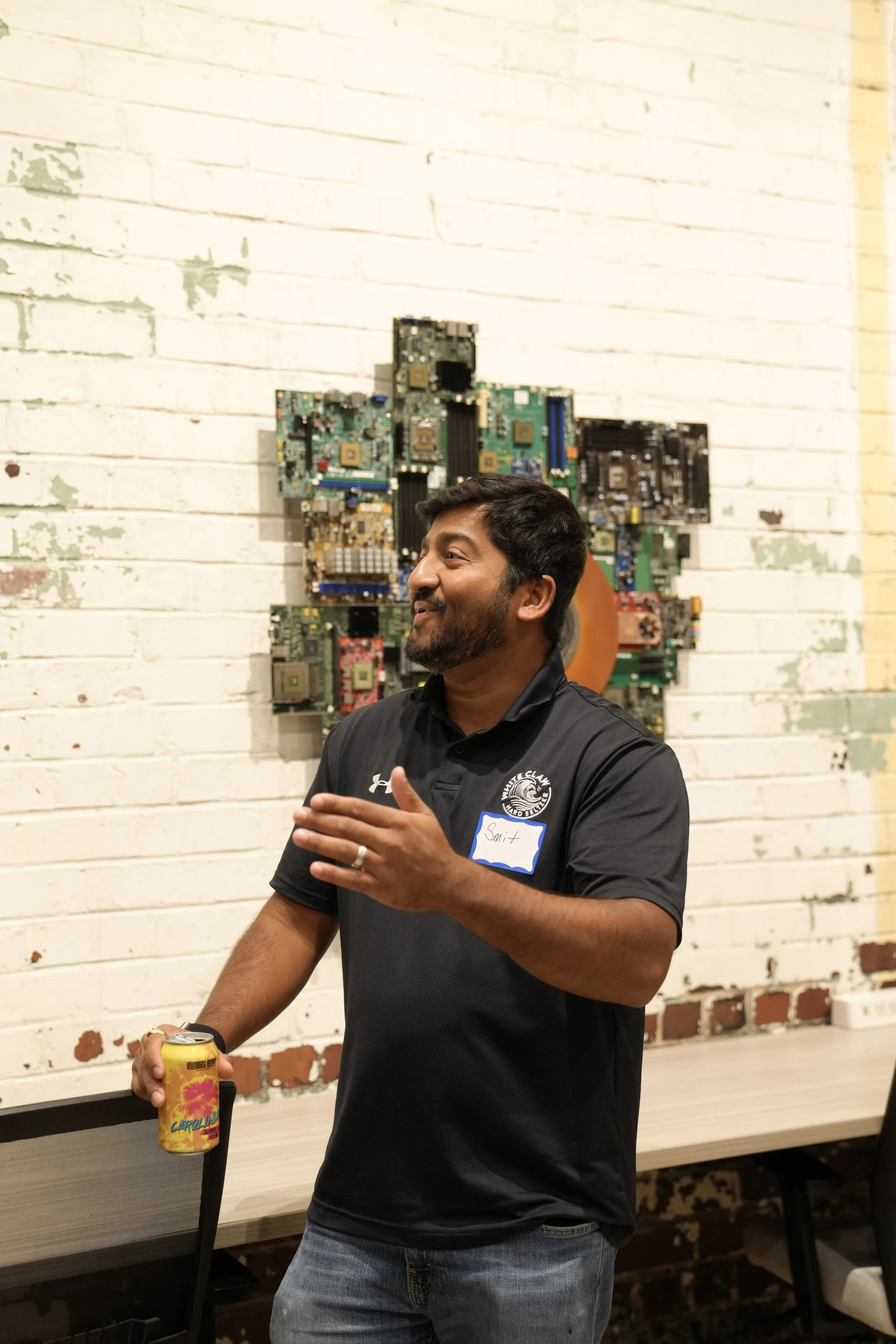
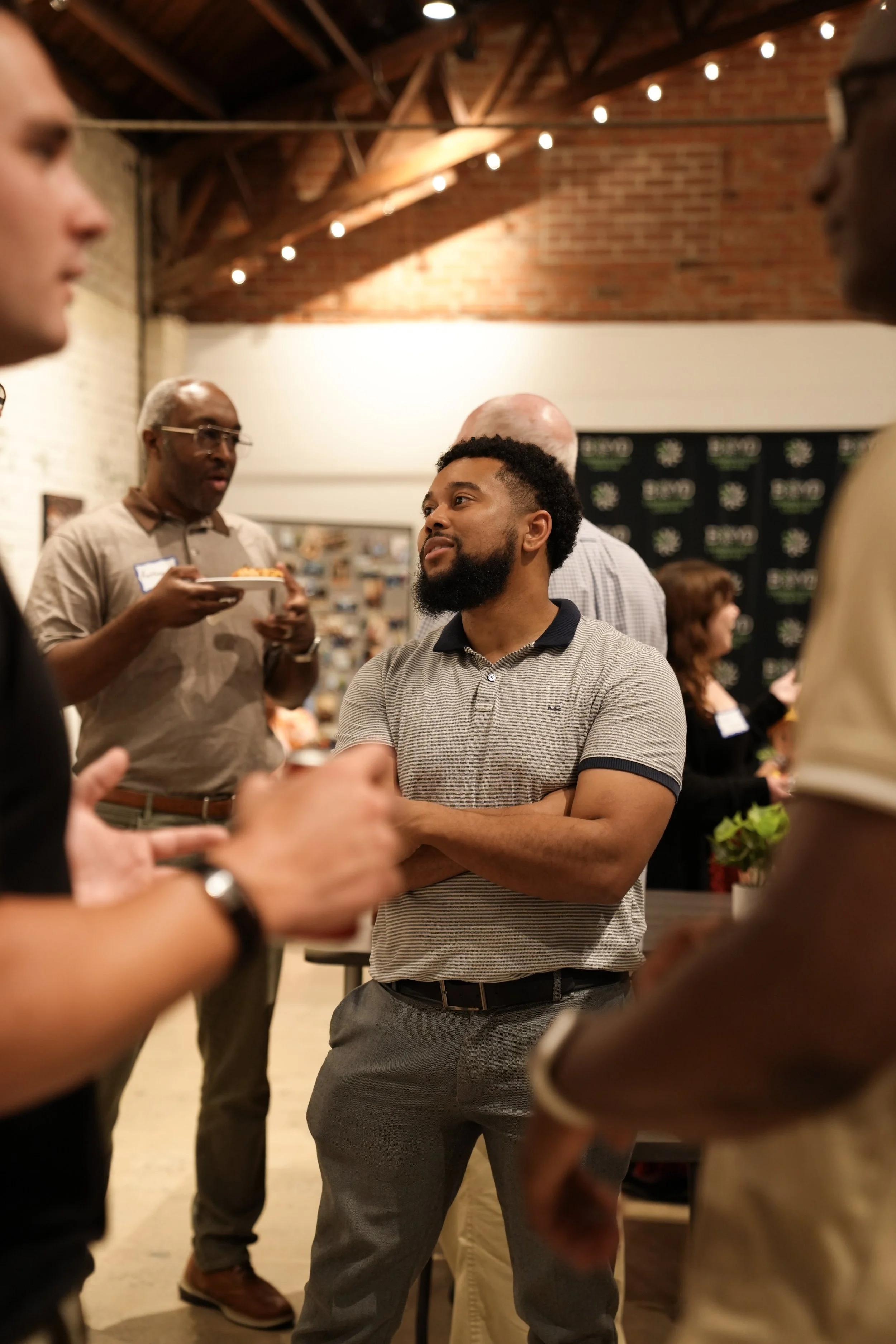

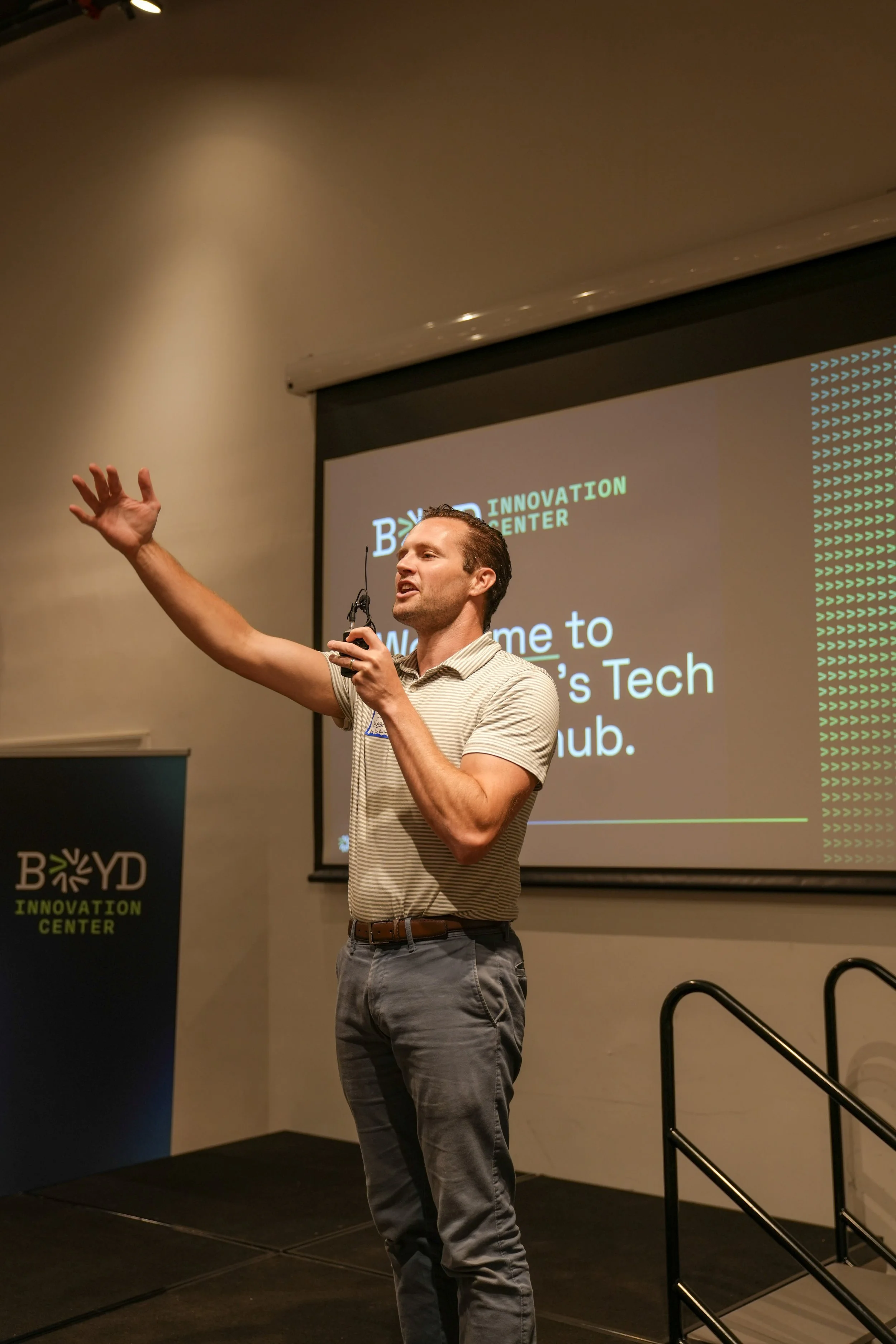
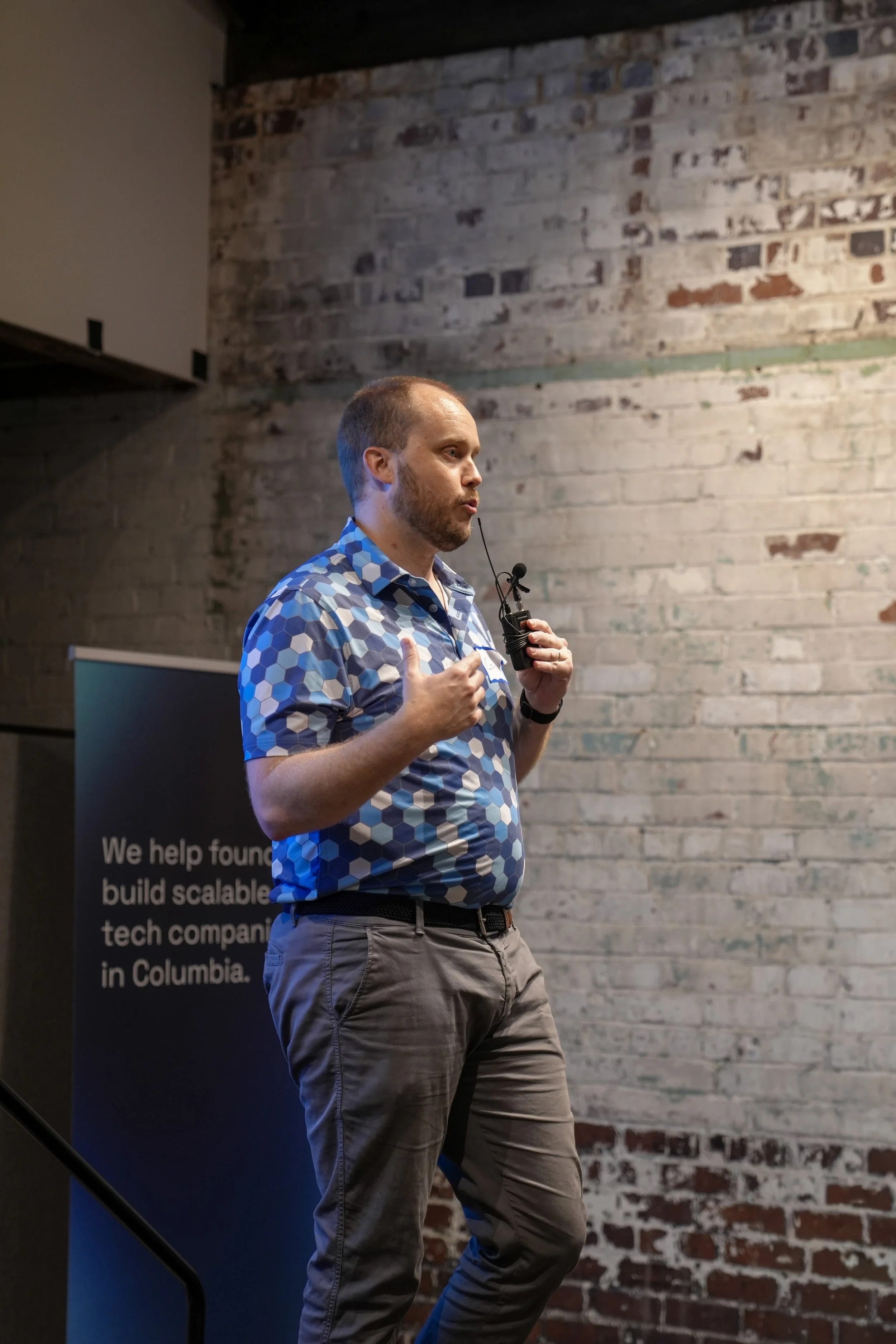
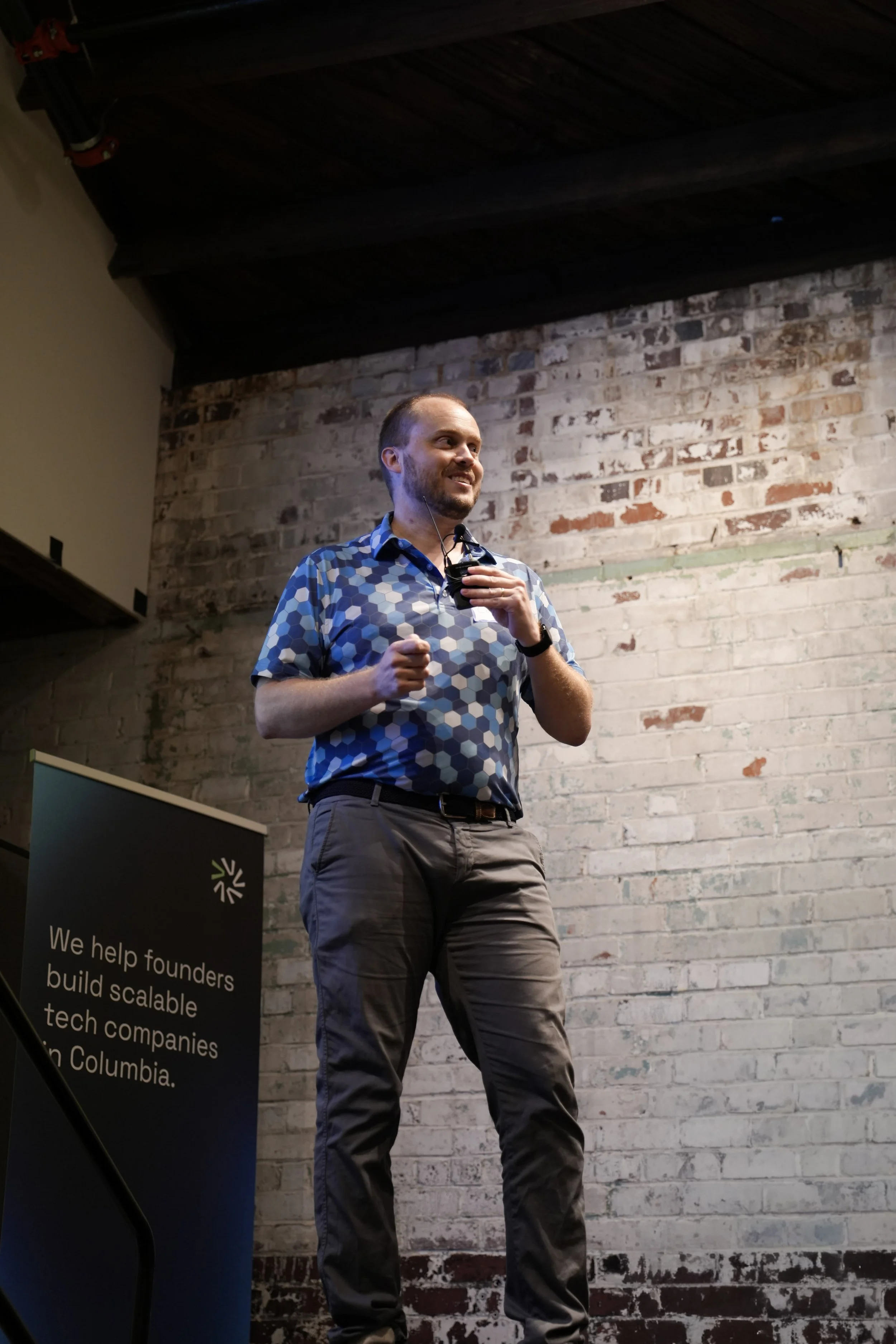
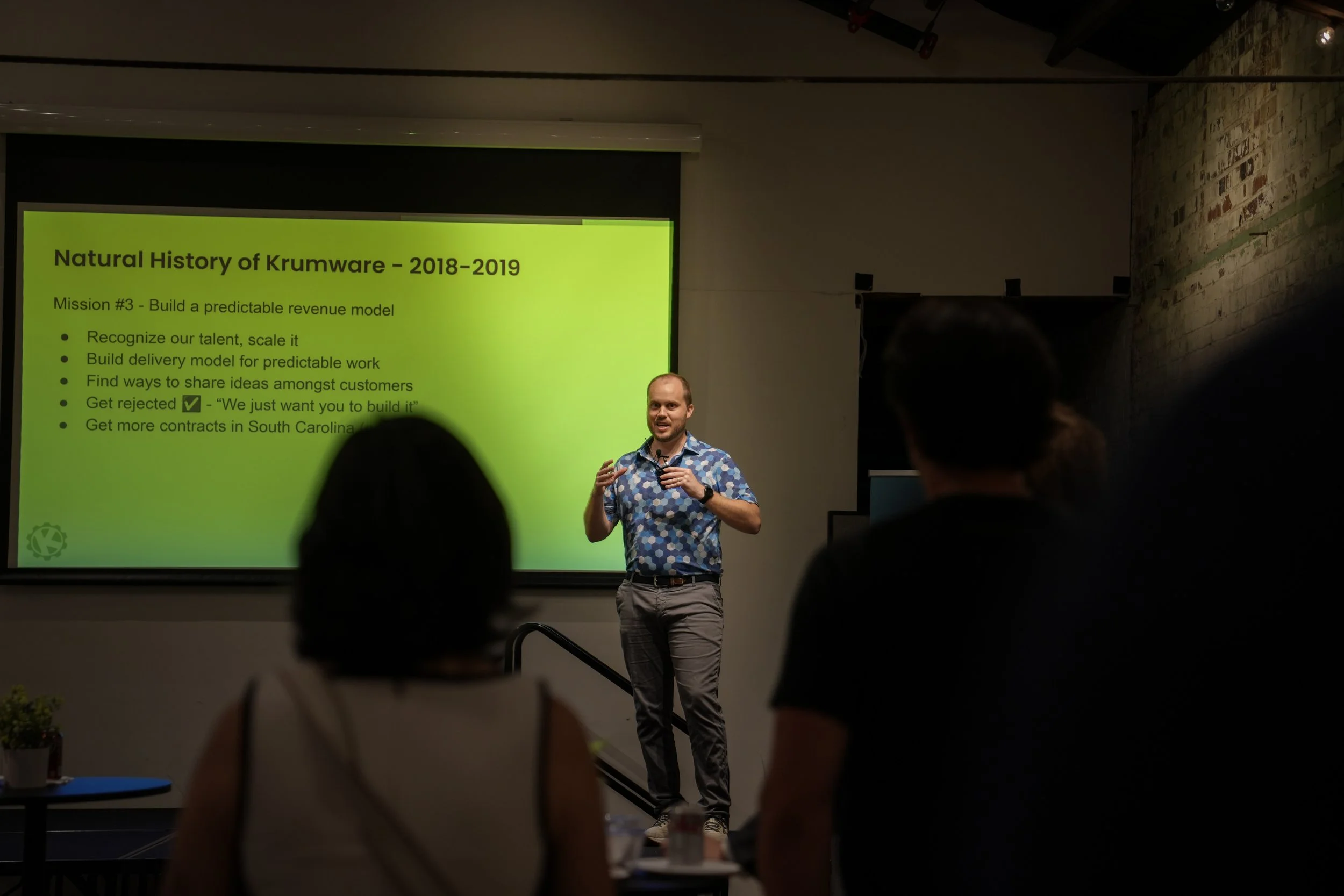
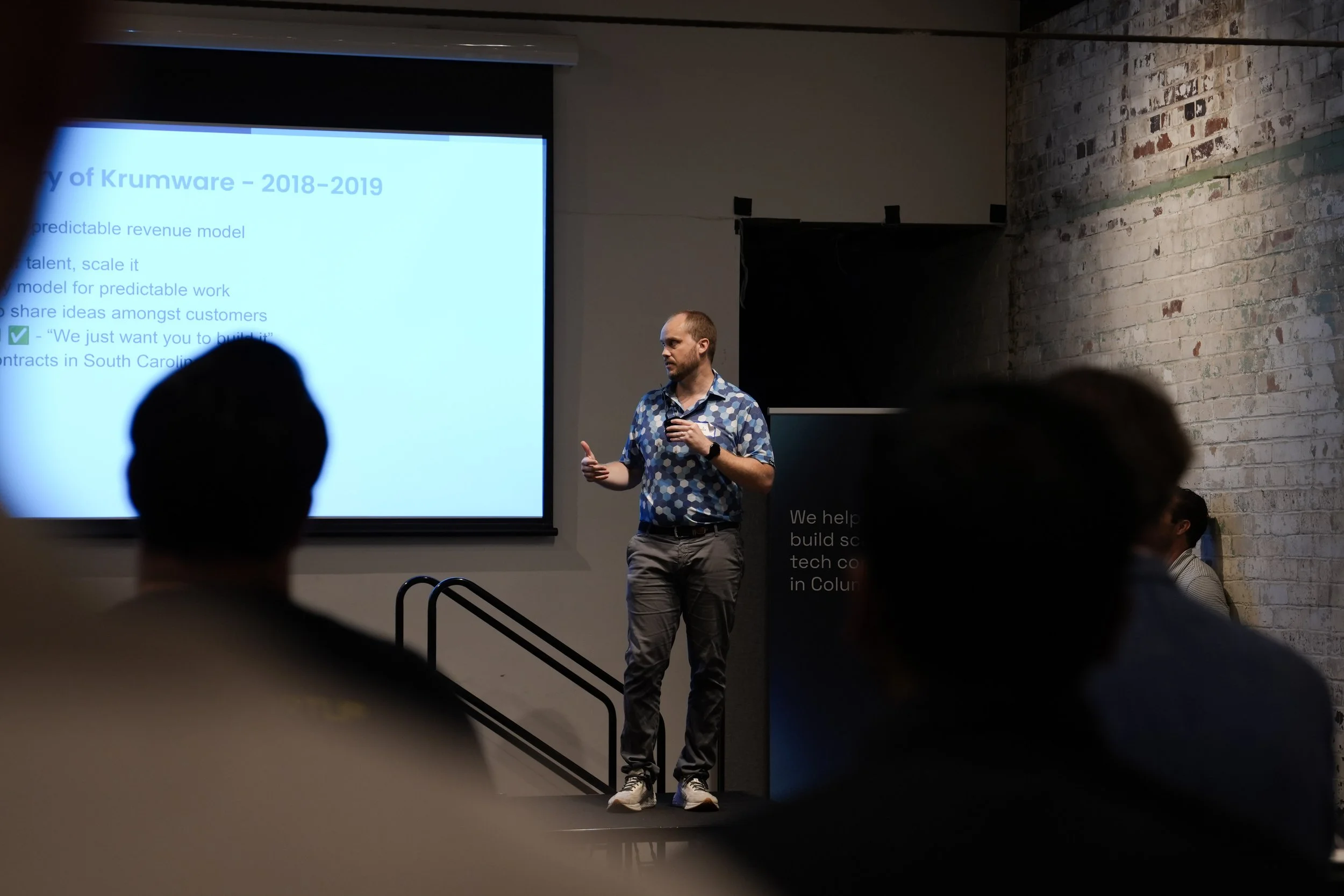


Colin Griffin, founder of Krumware, kicked off this month's Tech on Tap with a confession: he's spent nearly a decade building a company that started out by selling "solutions to problems that don't exist." That was both the title of his talk, and a key part of Krumware’s history. Krumware built something useful years before the industry had a name for the problem or ideas for the solution.
Today, Krumware has established itself as a group of “software engineering experts providing the tools that engineers need”. But as Colin walked us through the natural history of Krumware, it was obvious that tidy one-liner took about eight years, a torn ACL, a pandemic, and a lot of sleepless nights.
Learn, Build, and Repeat
Krumware began in 2016 with no name, no clients, and a short 6 month runway. The plan was to find a company name and sort out what the company was going to be. When Colin tore his ACL, the runway was stolen and Krumware was forced to pivot. The real priority quickly shifted from planing and establishing a product and company, to finding contracts, and with them, money.
Sell What You Want to Build
With the lights on, 2017 had a sharper focus: sell the work you actually want to do. For Krumware that meant betting on cloud native software and containers early, before most clients knew they needed it.
It also meant a crash course in the business side of things from learning what a portfolio was, what an NDA was for, and eventually what correct pricing meant. That last lesson had a punchline: once Krumware began pricing the work properly and building what they really wanted to, they landed even fewer contracts than before. The upside was that the deals that did close were the right ones. That was enough to start hiring a few people, teaching them as fast as humanly possible, and staying up all night learning the actual mechanics of running a company.
By 2018, the goal was to turn all that experience into something repeatable. Colin and the team started recognizing where their real talent was and tried to scale it. Building a delivery model and looking for ways to share ideas across customers instead of solving the same problem from scratch every time seemed to be a more effective model. The market had other plans, however. The pitch to productize kept getting the same response "We just want you to build it". This was actually a clue about what customers valued, even if it wasn't what he was selling. The predictable revenue model wasn't there yet, but by 2019 the feedback pointing toward it was starting to pile up.
Then 2020 arrived, and the mission narrowed to a single word: survive. Colin learned how to apply for loans and kept the team focused on selling whatever they could. It was another all-nighter of a year, this time spent just trying to keep the business alive. Anyone who ran a company through 2020 remembers when staying open was the entire strategy.
Listen to the Market
Coming out of survival mode, Colin started asking harder questions. Why was it so difficult to describe what Krumware actually did? How did other companies describe the same kind of work? And what problems did companies say they had, in their own words?
The answer was Platform Engineering. Krumware helped stand up the Cloud Native Platform Engineering Community, and the problem they had been quietly solving since 2016 finally had a name the rest of the industry could use too.
Do More of “That”
By 2024, the strategy finally had a rhythm to it, which Colin summed up as "do more of that." Find customers and build them into partners. Find partners and build them into customers. Find problems, then fix them by building things. The milestones he had been chasing for years were checked off along the way: a solution to a problem that actually exists, and a revenue model people can actually buy.
Where Krumware is Now
Today the work is about the connective tissue between tools, or as Colin put it, "the glue." Krumware is productizing how products work together, helping customers get their footing with AI, and building tools that bridge the gaps in between. Two products make that concrete: Epinio, which takes developers from code to a live URL on Kubernetes in a single push, and a design system called Trailhand.
Key Takeaways
Being early means selling problems people don't know they have. Krumware bet on cloud native and containers years before the industry had language for them. For nearly a decade that meant selling "solutions to problems that don't exist" — until the world caught up and proved the bet right.
Sell what you want to build. When Colin started pricing work properly and pitching the cloud native work he actually wanted, Krumware landed fewer contracts, not more. But the deals that closed were the right ones.
If the language doesn't exist, create it. Krumware couldn't explain its own work until it stopped asking "what is this problem?" and started asking "what is it called?" The answer was Platform Engineering — and Krumware helped stand up the community that gave the whole industry the words.
Clarity comes last, not first. That tidy one-liner about what Krumware does took eight years, a torn ACL, a pandemic, and a lot of all-nighters. The strategy only found its rhythm, "do more of that", after years of learning, building, and repeating.
What is Tech On Tap?
Tech on Tap is our monthly series bringing together Columbia's tech community for expert insights and real connections, every third Thursday from 5-6:30pm at the Boyd Innovation Center. Featured speakers share practical lessons from their founder journeys, followed by networking over drinks and light bites. It's where Columbia's tech founders, professionals, and future entrepreneurs gather to learn, connect, and grow.
Sign up for our newsletter to get notified about our next Tech on Tap, plus all the other resources, programs, and, events happening in the Midlands to support tech startups. Our check out our events calendar here.
Ready to Be Part of Columbia's Innovation Community?
Whether you're testing your first idea, scaling a growing company, or exploring what role you want to play in the startup world, the Boyd Innovation Center is your home base.
Connect with us: